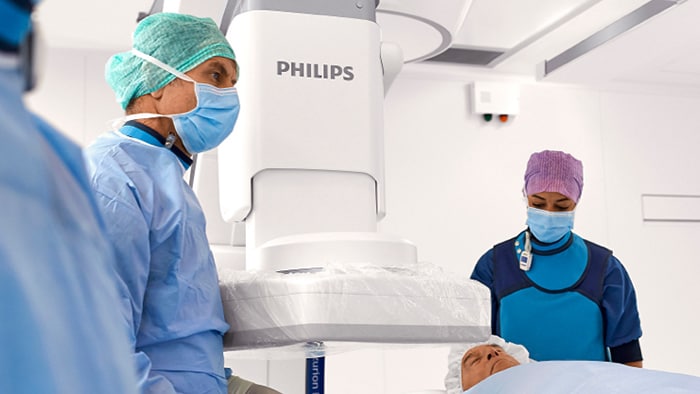
What good design does: relieving the burden on an interventional cardiologist
Imagine you are an interventional cardiologist, performing minimally invasive heart procedures. Every procedure is a top performance. You work long hours. You have to stay focused. Because every decision is critical for the patient. If you were an interventional cardiologist, what would you really want? To focus on what truly matters: saving lives without worrying about your workload.

Designing for impact
This is the impact that design makes. It is not just about the shape, color or look-and-feel of a product. Designers constantly observe how medical equipment is being used in practice and talk to end users to find out their needs and how their lives can be improved. In the video series ‘What good design does’, we explore the impact that design makes, by working backwards from the needs of patients, healthcare professionals and people at home. In the first episode, we stepped into the shoes of 8-year-old Sophie, who is getting her first MRI exam.
In the case of Kathryn, it is several innovations make sure her journey is more comfortable:
- Toggle view
Related pages
Related pages