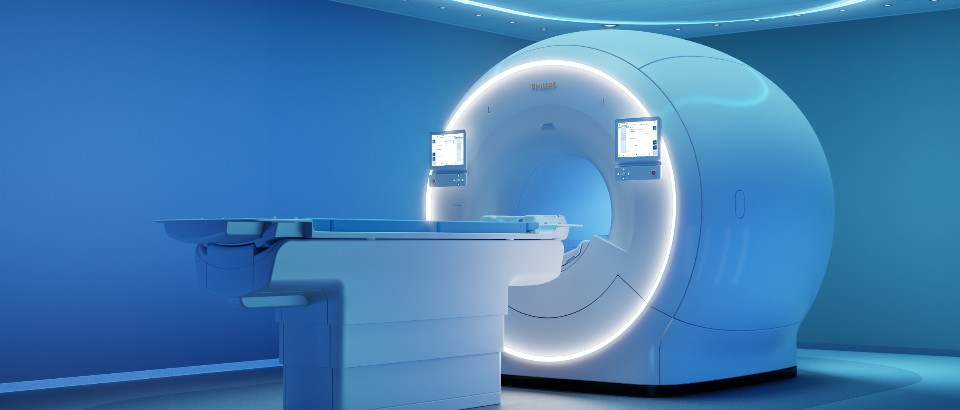
Sustainable innovation through EcoDesign
With EcoDesign, we embed sustainability at the heart of our innovation processes. Our goal is to minimize our total environmental footprint by reducing greenhouse gas emissions, conserving resources and enabling circular design – all while delivering meaningful and sustainable solutions for healthcare and consumers.
A legacy of sustainable product design
Philips introduced its first EcoDesign project in the 1990s, laying the foundation for a more sustainable approach to product development. Since 2024, Philips has fully embedded EcoDesign in its innovation process, to ensure that new product introductions are designed in line with its environmental ambitions.
These products are designed to improve energy efficiency and support circularity throughout the entire life cycle. Sustainable material choices – including recycled or renewable alternatives – also help to reduce the environmental impact of materials in our packaging and products.
We regularly update our EcoDesign requirements based on the latest insights, focusing on customer needs, evolving regulations, and reduced environmental impact.

Energy
Since energy use often drives a product’s lifecycle impact, we’re improving efficiency across our portfolio. Philips is advancing its goal towards achieving net-zero emissions by 2045.
Packaging
Our packaging is designed for circularity, with a focus on material, weight and volume reduction, along with sustainable material choices (e.g., reusable, renewable, recycled and/or recyclable content). We’re transitioning our consumer portfolio to paper-based packaging and making it easier to recycle and reuse, supporting our broader materials commitment.
Substances
We are committed to minimizing and phasing out substances of very high concern, but enforcing compliance with the restrictions detailed in the Philips Regulated Substances List (RSL), which includes substances banned by law or by Philips
Circularity
Products are designed to help reduce resource consumption and our dependency on virgin non-renewable materials. Our product designs incorporate low-weight design and use of recycled and renewable materials, including recycle-ready design and designing for disassembly. Longer usage lifetimes also help to reduce the resource consumption that’s associated with manufacturing new products. For example, Philips refurbishes medical imaging equipment to give it a second life.
Digitalization
Digital solutions and artificial intelligence (AI) are integral to Philips’ EcoDesign strategy. By leveraging cloud-based and AI-driven innovations, we optimize resource use, support dematerialization and enable smarter, more sustainable healthcare delivery.
EcoDesign process and life cycle analysis
Philips use life cycle analysis and its Environmental Profit & Loss account to identify environmental hotspots and guide innovation. Our Environmental Profit & Loss account expresses the total environmental impact of our activities and products in monetary terms. This provides insight into the main environmental hotspots where we need to innovate to reduce our impact. By addressing impacts from raw materials to end-of-life, Philips ensures continuous improvement and transparency in its sustainability journey.
Scaling up our circular offerings
Our EcoDesign approach helps reduce resource use and waste through low-weight design, renewable or recycled materials, longer product lifetimes and recycle-ready design.
Supporting recycling
We continuously work on improving the environmental performance of Philips products, such as designing for recyclability and re-use and managing e-waste.
Substances management
Reducing – and, wherever possible, eliminating – the use of hazardous substances in our products and production processes is integral in our commitment to health, safety and the environment.


