Partnering for impact


We partner with customers, like-minded peers, governmental organizations and civil society to drive positive and tangible environmental and social impact across our value chain and the healthcare sector. We also contribute to cross-industry initiatives to support the adoption of responsible and sustainable practices globally.

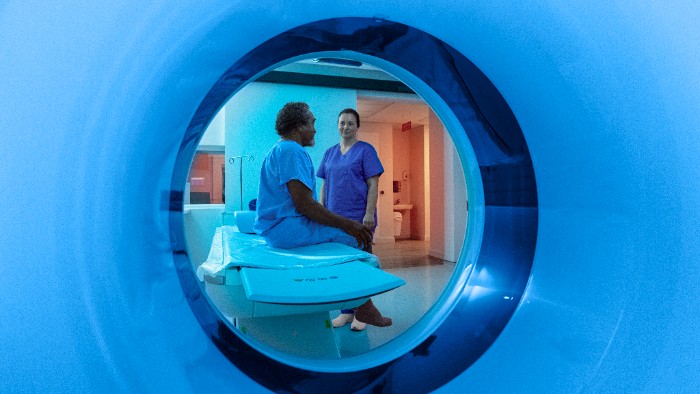
llustration showing healthcare professionals

Partnerships for environmental impact


Through collaborations and memberships like the ones below, we continue to advance sustainable healthcare ​
delivery.


  • Philips is a member of COCIR, the European Trade Association representing medical imaging, radiotherapy, health ICT and electromedical industries.
  • The Medical Equipment Proactive Alliance for Sustainable Healthcare (MEPA) is a joint initiative of COCIR, HealthTrust Performance Gap and Vizient, Inc., aimed at reducing the environmental and social impacts of medical imaging devices supplied to the healthcare sector. In 2024, it published global sustainable criteria for purchasing medical imaging equipment, providing practical guidance for healthcare organizations to drive and scale sustainability – bringing the industry one step further in making green procurement the standard.
  • RE100 is a global initiative bringing together the world’s most influential businesses committed to using 100% renewable electricity in their operations. Philips is one of more than 440 members.
  • The Science Based Targets initiative (SBTi) is a corporate climate action organization that enables companies and financial institutions worldwide to reduce emission and reach net-zero. SBTi recently validated Philips’ 2045 net-zero science-based target. 
  • Since 2023, Philips has been a contributor to the Zero Emission Maritime Buyers Alliance (ZEMBA), the first-of-its-kind buyers group working to accelerate the most sustainable, scalable, and economically viable solutions for the maritime sector.
  • The Ellen MacArthur Foundation works to accelerate the transition to a circular economy. A long-standing partner, Philips participates in leadership engagements with EU policymakers and global businesses to support the development of circular economy frameworks.
  • Philips engages with the World Business Council for Sustainable Development (WBCSD) and other stakeholders to advance circular economy practices. In 2025, the Global Circularity Protocol (GCP) for business was published as the first global framework for standardized circularity measurement and reporting. Philips is part of the Business Advisory Committee and Technical Working Group alongside 80 other organizations.
  • Philips participates in the EU-funded Digital Health in the Circular Economy (DiCE) project, which addresses the environmental impact of digital health devices. As a consortium partner, Philips supports the development and evaluation of circular solutions, including pilots with EU hospitals to assess reprocessing workflows for selected devices and collaboration on circular product redesign.
  • Philips engages with the Taskforce on Nature-related Financial Disclosures (TNFD), contributing to the development of nature-related frameworks and guidance, particularly for nature transition planning and disclosures for the technology sector.

Wind mill
Solar panels cargo
Birds eye view of a Forest

Partnerships for social impact


Through a network of strategic public and private sector partners, we aim to advance healthcare access and equity through the large-scale deployment of innovative health products and solutions.

  • UHC2030 is a global multi-stakeholder platform supporting the goal of Universal Health Coverage, ensuring that all people can access quality health services without financial hardship. To help achieve the commitment made by United Nations member states – health for all – and as a member of the Private-Sector Constituency, Philips supports the UHC2030 mission and contributes to dialogue and collaboration across sectors to advance health equity and system strengthening.
  • Co-led by Philips, the Digital Connected Care Coalition (DCCC) is an action-driven, multi-stakeholder platform committed to accelerating the digital transformation of healthcare to achieve universal health coverage in low- and middle-income countries. This platform scales digital care projects that are integrated, interoperable and accessible for lasting positive impact.
  • Philips Foundation aims to enable access to quality healthcare for underserved communities across the globe. Where commercial solutions are not viable, Philips Foundation provides financial support for joint activities, collaborates with non-profit partners and invests in early healthcare ventures to unlock access to care, effective deployment and long-lasting impact. Philips Foundation applies Philips’ healthcare expertise and operates along a continuum of capital – from grant-based projects to impact investments – through strategic partnerships, meaningful innovation, and catalytic funding.
  • Philips is collaborating with the Gates Foundation and research centers across the globe to improve access to quality pregnancy care in rural areas through the latest health technology and training, helping to reduce premature and preventable maternal and infant deaths.
  • Together with the Partnership for Maternal, Newborn, and Child Health (PMNCH), the world’s largest alliance for the health and well-being of women, children and adolescents, Philips seeks to advocate and collaborate for affordable access to high-quality maternal care during pregnancy and after childbirth, to bring care closer to those who need it most.

Philips foundation visual woman with child
Access to care lumify kigali rwanda hospital
Brand Photography

Cross-sector partnerships


Addressing today’s complex and urgent challenges requires collaboration across sectors. Through collective action, these partnerships support more sustainable and resilient health systems and contribute to accelerating responsible and sustainable business practices.

  • The Responsible Business Alliance is the world’s largest industry coalition dedicated to responsible business conduct in global supply chains. As a member, Philips commits to the RBA Code of Conduct and works toward conformance with its standards.
  • Philips is a member of the Partnership for Health System Sustainability and Resilience (PHSSR), a non-profit, multi-sector collaboration bringing together academic institutions, international organizations, industry and policymakers. Active in more than 30 countries, PHSSR commissions independent research to provide evidence-based insights on strengthening health systems. In 2025, PHSSR launched policy roadmaps on early action against non-communicable diseases, contributing to international discussions on health system resilience.

EpiQ pediatric scan
Young patient in pediatric hospital bed
Philips employees indoors office talking

You are about to visit a Philips global content page

Continue

You are about to visit a Philips global content page

Continue

Our site can best be viewed with the latest version of Microsoft Edge, Google Chrome or Firefox.