
Expanding access to care

Innovating to improve access to care

Turning ambition into impact
Philips focuses its efforts where care is most needed, setting clear targets for medically underserved communities. We work with customers and strategic partners – particularly around cardiovascular care and maternal and child health – to:
• Expand timely access to care and tailored treatment through inclusive, preventive and sustainable innovation. • Decentralize care delivery and reduce healthcare costs by bringing services closer to patients through digitalization, AI and new business models. • Strengthen health system resilience through collaboration across the healthcare value chain, for long-term impact. This combined approach supports healthcare reform, business performance and the transformation of healthcare delivery. It helps ensure that patients can access the care they need, healthcare professionals can work more efficiently, and our employees can contribute to meaningful, real-world impact. Our innovations are designed to support healthcare professionals by helping reduce administrative burden and enabling more timely care, while consumer offerings encourage healthier behaviors and support well-being.

Partnering to expand access
Expanding access to care requires collaboration across the healthcare ecosystem. Philips works closely with public and private partners, customers, governments, NGOs, SMEs and international organizations to co-create solutions that are trusted, adopted and scalable.

Philips Foundation
Philips Foundation's enables access to quality healthcare for underserved communities through innovation, partnerships, and catalytic funding. Working across a continuum of capital, it applies Philips’ expertise to develop scalable solutions linking community care to broader health systems.
Bridging gaps in healthcare access
through innovation and collaboration
through innovation and collaboration
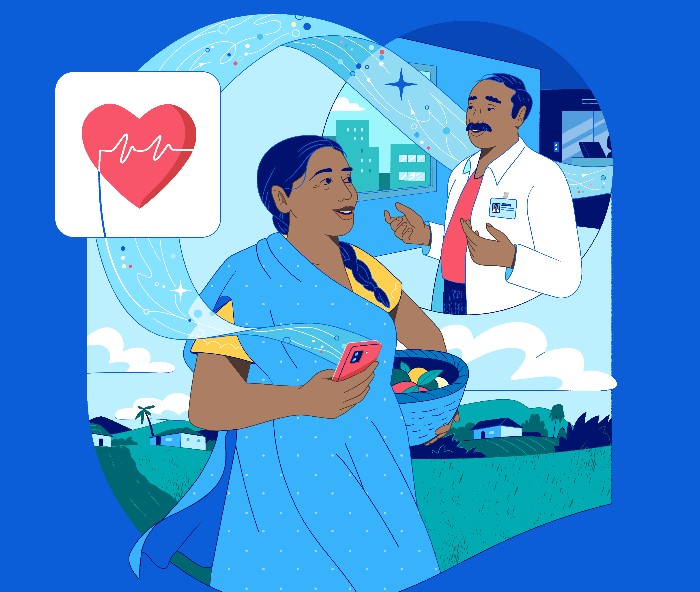
New business models
HeartPrint is a healthcare venture in India supported by Philips that explores digital approaches to cardiovascular screening. Using a mobile phone application, individuals can capture selected health indicators that may be shared with healthcare professionals to support early assessment and referral decisions. The initiative demonstrates how scalable, technology-enabled models can expand access to preventive cardiovascular care.
Patient-centric innovation
A partnership between Indonesia’s Ministry of Health and Philips is creating a nationwide network of advanced image-guided therapy rooms. The multi-year initiative focuses on expanding access to minimally invasive treatments across hundreds of hospitals, strengthening care pathways for heart disease, stroke and cancer, and increasing access to care to benefit millions of patients.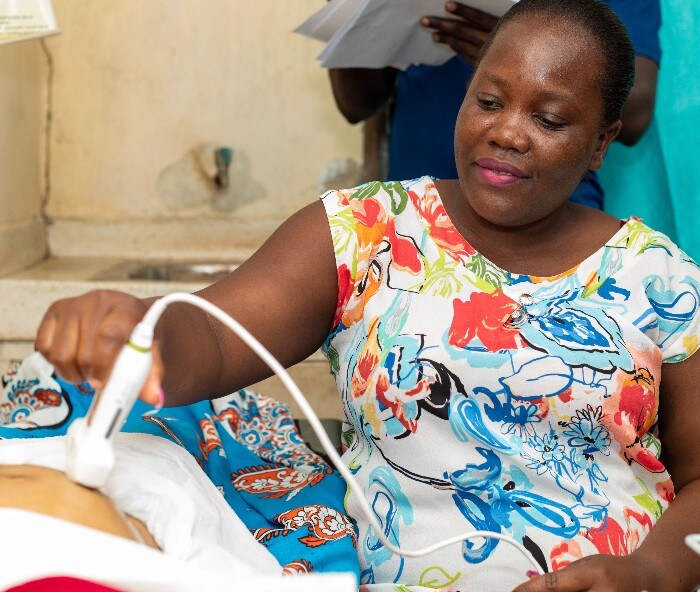
Digital transformation
Philips is developing and piloting an AI-enabled obstetric application, known as Philips SmartSweep, in partnership with the Gates Foundation and research centers across the globe. Designed to help midwives and nurses with point-of-care decision-making and referrals, this innovation is supporting more consistent maternal health screening, particularly in remote and underserved areas.
Partnerships and collaborations
In Georgia, US, Philips works with Medicaid plans and healthcare partners to support access to prenatal and postpartum care for women in underserved areas. The program provides remote monitoring tools for conditions such as hypertension and diabetes, enabling licensed professionals to monitor patient data and support care delivery in the home.
Digital support for equitable pregnancy care
Philips is working with states and healthcare organizations in the US to help improve maternal health equity through the Pregnancy+ app – the world’s leading pregnancy tracker app. By supporting partners in addressing barriers linked to race, ethnicity, income, and education, the initiative helps expand access to trusted information and digital tools for expectant parents.