Empathy as a superpower in an AI-driven world
At WebSummit in Lisbon, Peter Skillman, Global Head of Design at Philips, shared why empathy – not technology alone – is the key to driving meaningful, human-centered innovation in healthcare
Feb 13, 2026 | 3 minute read
At WebSummit, one of the world’s largest technology conferences, Peter Skillman, Global Head of Design at Philips, took the audience on a deeply human journey through the rapidly changing worlds of design, technology and healthcare.

In a time when artificial intelligence can generate software, interfaces and content in minutes, Peter challenged the audience to look beyond speed and efficiency. His message was clear: while technology is transforming how we work, empathy remains the true differentiator – a strategic capability in developing solutions that enable better care for more people.
“We’ve all become makers”
Peter opened his keynote by demonstrating how AI tools can radically accelerate design and development. What once took months can now be achieved in weeks, or even days. Designers, engineers and product teams are no longer constrained by traditional roles – “we’ve all become makers.”
But with this shift comes new responsibility. As AI-generated experiences become increasingly realistic, trust becomes essential. “The most important thing now is trust – in what you deliver, for your people and for your customers,” Peter explained.
This is where design takes on a deeper role: not just shaping interfaces, but ensuring that technology is ethical, understandable and truly serves human needs.
Designing with empathy: from fear to confidence
To illustrate the power of empathy in action, Peter shared the story of Sophie, an eight-year-old facing her first MRI scan – an experience that can be frightening for many children. Today, up to 45% of pediatric MRI procedures require sedation or anesthesia, which can negatively impact both patient outcomes and clinical workflows.

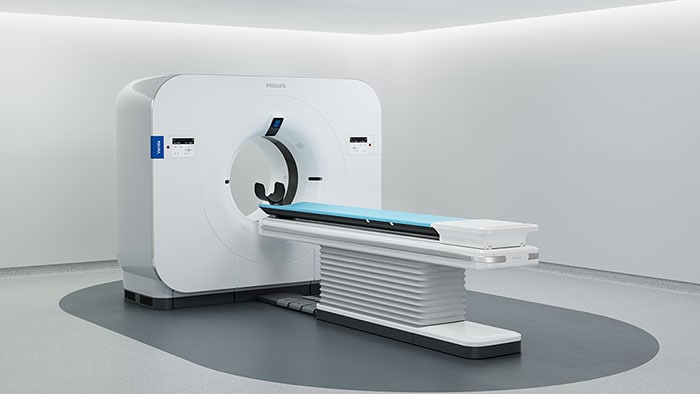
By reimagining the experience through a child’s eyes, Philips designers transformed the MRI journey into something familiar and playful. Instead of being confronted with an intimidating scanner, children are introduced to a ‘kitten scanner’ and guided through the experience as the main character in the story.
The result? Less fear, fewer interventions and a more positive experience for patients, families and clinicians alike. It is a powerful example of how human-centered design can directly improve care outcomes.
Design as a strategic capability at Philips
Peter’s message closely reflects the Philips Design philosophy, where empathy is the foundation of innovation. At Philips, design begins by deeply understanding people – patients, caregivers and clinicians – and the real-world environments in which care is delivered.
Rather than relying solely on what people say, Philips designers observe what people do, uncovering unmet needs that are often invisible in traditional research. By working backwards from these insights, teams prototype, test and validate solutions early, ensuring they deliver meaningful value.
This approach helps Philips simplify complex healthcare environments and their workflows, reduce stress for patients and clinicians and create connected experiences across hospitals, homes and digital touchpoints.
Empathy inside teams drives better outcomes
Empathy, Peter emphasized, is not only about customers – it is also about how teams work together. High-performing, creative teams depend on psychological safety: environments where people feel safe to experiment, learn and contribute.
As a leader, Peter believes that unlocking the creative potential of others is one of the most important responsibilities. Diverse teams, iterative thinking and learning by doing are essential to innovation – especially in complex, safety-critical domains such as healthcare.
Looking ahead: human-centered innovation for the future of care
Peter concluded by looking to the future of healthcare, where care increasingly moves beyond the hospital walls. Advances in remote monitoring, personalized medicine and predictive analytics are enabling earlier interventions and better outcomes – while allowing people to recover in the comfort of their own homes.
At Philips, these innovations are guided by a clear purpose: putting people first. By combining advanced technology with deep human insight, Philips Design helps ensure that innovation remains grounded in what truly matters – improving lives, supporting clinicians and delivering better care for more people.
Peter concluded, in a world where anyone can be a maker, empathy is the superpower that will define the future of meaningful innovation.
Media contacts

Contact details Contact details

You are about to visit a Philips global content page
Continue