How empathy shaped the Azurion experience
Feb 12, 2026 | 2 minute read

About the author About the author
Dirk works as a Senior Product Designer at Philips IGT, a role that perfectly marries his technical expertise with his passion for design. His journey began when he first studied as a tool engineer, drawing inspiration from a family steeped in design, architecture, and art. It was during his graduation project with Philips Medical, where he worked with portable ultrasound equipment, that Dirk’s passion for the field truly deepened. Now, with 36 years down the line, Dirk continues to be fascinated by the interplay between tools, people, and spaces. His work is not just a career but a lifelong passion, driven by the evolving healthcare innovation landscape of design and engineering.

You are about to visit a Philips global content page
Continue It all started with an unusual challenge from a doctor: “Pretend you’re having a stroke.” So I did. As I walked into the emergency room, the medical team went into full response mode. Alarms blared, monitors flickered, electrodes covered my chest. “Every minute of delay costs 1.9 million neurons,” the doctor reminded us. That sentence reframed everything about what we were designing for.
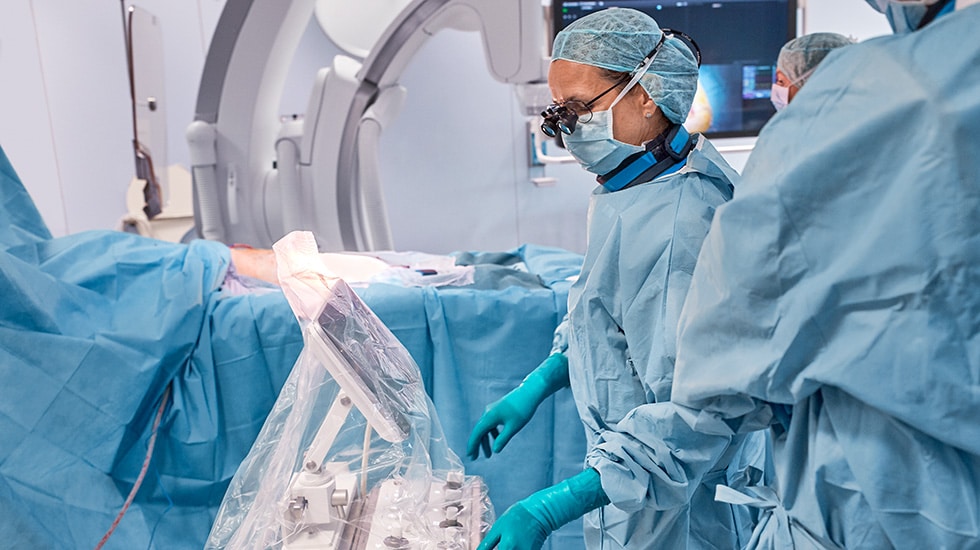
That sense of urgency became the heartbeat of our project: to create a solution built entirely around the real needs of patients and the people caring for them. It was the foundation for what would later become Azurion, an image-guided therapy platform designed to help clinicians act faster when time matters most.
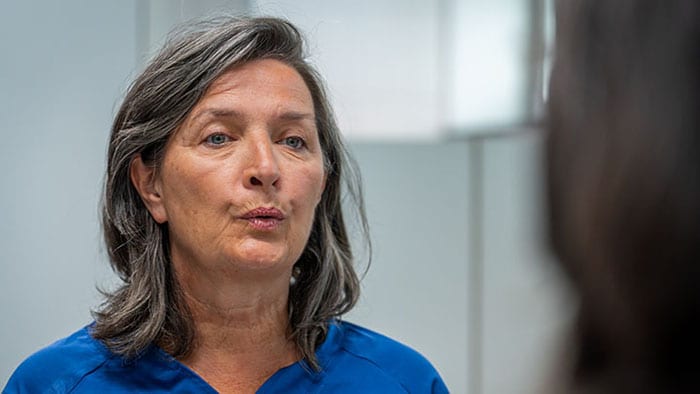
Seeing through the patient’s eyes
We spent countless hours – visiting over twenty hospitals - working side by side with doctors, nurses, and technologists in actual procedure rooms. That’s where the small details revealed their power. I noticed how patients reacted when the system moved: sharp, mechanical motions heightened their anxiety. So, we tuned the motion and sound design, introducing smoother transitions and a softer sound. It still communicated ‘everything is working’, but in a way that calmed the patient and the room. An anesthesiologist once told us: “If the heartbeat’s too fast, we can’t begin.” It was a reminder that stress shapes outcomes. I couldn’t control a patient’s fear, but I could shape the environment around them, designing calm through sound, movement, and touch.
Designed to be felt
In the lab, I observed that physicians rarely looked down at the controls; their focus was locked on the screen. That is why we designed a tactile interface that could be read by touch; distinct textures, subtle contours, stainless-steel details that gave a sense of surgical precision.
We also spotted something simple yet telling: the narrow round bar staff leaned on caused wrist strain during long procedures. Redesigning it into a flat, supportive armrest brought instant comfort and reduced fatigue. A small change, with a big difference.
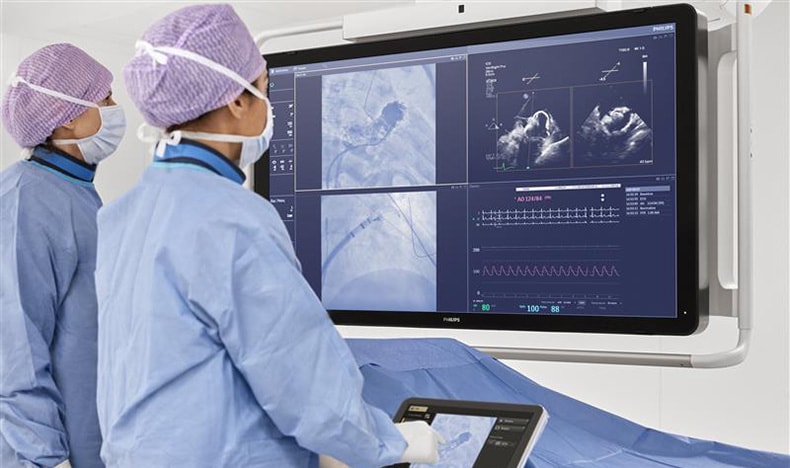
What true support looks like
You know a system truly works when it fades into the background. The room grows quiet, the team moves in sync, communication becomes instinctive. It’s like an orchestra: the lead interventionalist as conductor, everyone else anticipating the next cue.
That’s what we wanted Azurion to achieve: helping doctors find their flow so patients get the best possible care. In the end, that’s what innovation really means: design that saves time, reduces stress, and ultimately, helps save lives.
Azurion is a living proof of patient centricity design.
Seconds into second chances
Launched in 2017, Azurion transformed healthcare by evolving from basic systems to an integrated, smart solution. Initially inspired by early stroke care insights, Azurion Image Guided Therapy System now leads globally, supporting a wide range of procedures. With Azurion, physicians streamlined workflow to treat more patients per day, without compromising patient safety or quality of care [1].
In 2024, Azurion Neuro Biplane 3.0 ushered in a new era, seamlessly blending real-time 2D and 3D imaging with low radiation, dramatically transforming diagnosis and treatment. This innovation, recognized with the prestigious iF Design Gold Award in 2025 for its human-centered design, accelerates care in ways measured not only in seconds but in lives saved, exemplifying Philips' commitment to advancing healthcare solutions [2].
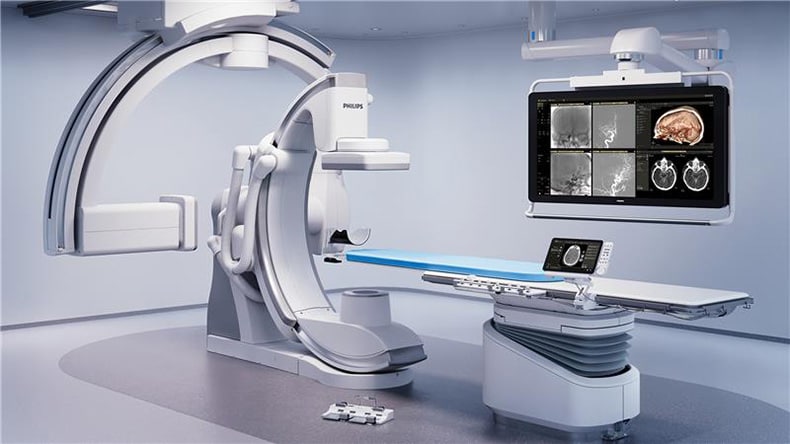
More on the Azurion journey can be found in the full interview featured in the book Philips Design | 100 Years of Impact, which can be ordered here.
Sources [1] https://www.philips.com.sg/healthcare/case-study/philips-azurion-lab-performance-study
[2] https://www.philips.com/a-w/about/news/archive/standard/news/articles/2025/human-centered-design-at-its-best-philips-azurion-neuro-biplane-wins-if-design-gold-award-2025.html