Why resilience in MRI now matters as much as performance
Apr 01, 2026 | 2 minute read
About the author About the author
Ioannis Panagiotelis is Philips' Business Leader for MRI, where he leads the global MRI business and drives innovation in precision imaging and AI-enabled diagnostics. With more than 20 years in diagnostic imaging, he has held senior leadership roles across GE HealthCare, Siemens Healthineers, and Elekta, spanning marketing, commercial strategy, and full P&L responsibility across global markets. Ioannis began his career in neurological imaging research and holds a PhD in Medical Physics and Bioengineering.

You are about to visit a Philips global content page
Continue Resilience in healthcare can no longer be reactive. The ability to keep essential services running when disruption hits - and to restore them quickly when it does - must be designed in long before it’s needed.
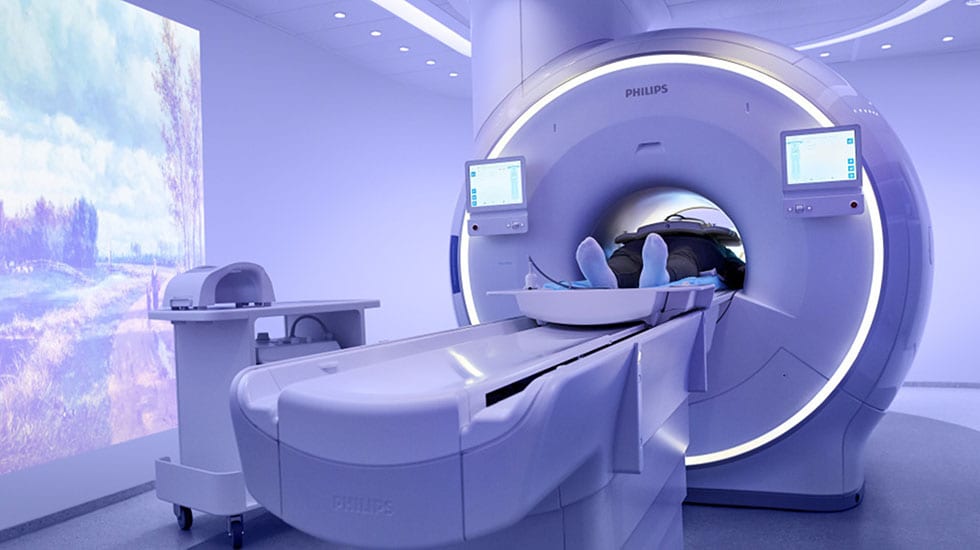
In MRI, resilience is being tested more than ever. When imaging capacity goes down, the effects are immediate: delays for patients, pressure on staff, and disruption across care pathways. So while performance and clinical confidence remain critical, health systems are increasingly asking a more practical question too: how resilient is this technology when conditions are far from ideal?
We have seen why that matters in real life.
In Puerto Rico after Hurricane Maria, imaging services were operating in the context of widespread infrastructure failure. Power, logistics and supply chains were all under strain. In those circumstances, every operational dependency becomes more visible.
More recently, in Spain and Portugal, a major power disruption affected hundreds of MRI systems across the peninsula. At one stage, dozens of systems were down simultaneously, including around 50 Philips BlueSeal systems. Yet nearly every Philips’ BlueSeal system was ramped up within only 48 hours, significantly faster than traditional MR systems industry-wide. That is what resilience looks like in practice: not just managing disruption, but restoring access to care quickly.
Today, that question of resilience extends beyond storms and blackouts. Recent geopolitical tensions have once again highlighted how vulnerable critical supply chains can be to events far beyond the hospital walls. For healthcare providers, the point is not to focus on one specific crisis. It is to recognise a broader reality: when an essential clinical service depends on a scarce and globally concentrated resource, resilience matters.
That is the wider context for helium.
Helium has been a constrained resource for years.
Supply is concentrated in a small number of countries, and prices have trended upward for decades – with a steady increase over the past decade driven by structural supply constraints and rising demand, and sharper rises more recently as disruptions have put additional pressure on the market. This is not just a short-term issue, but a long-term structural challenge.
For healthcare leaders, the question is not only what helium costs today. It is whether a critical imaging service should remain so exposed to a resource that is finite, volatile and logistically complex.
Seen in that light, helium-free MRI is about more than sustainability. It is about resilience by design.
Philips introduced BlueSeal helium-free technology almost a decade ago to put that principle into practice.
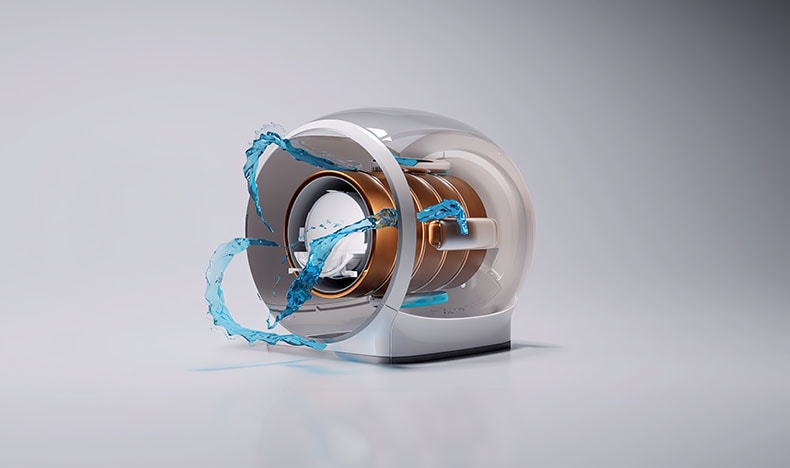
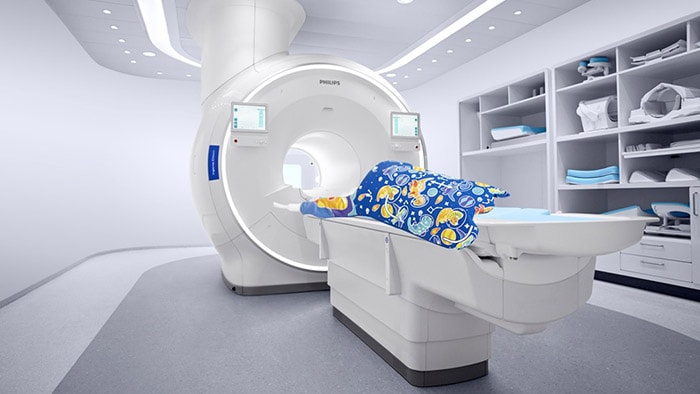
It dramatically reduces dependence on a scarce, non-renewable resource, requiring just 7 liters of helium compared to a traditional MR’s average of 1500, while removing the need for helium refills over the system lifetime – reducing exposure to supply disruption, operational complexity and associated cost pressures. And while the cost of MRI scanners, themselves, has remained largely stable – in many cases even decreasing – their operating cost has risen, driven by energy, installation and helium-related expenses, like quenches.
This all becomes particularly important when disruption occurs – whether from infrastructure failures, supply constraints or system shutdown events. The sealed magnet design helps avoid helium loss during shutdowns and enables a simpler restart process, without the refill logistics that can delay conventional systems. In Spain, Portugal and Puerto Rico, those benefits were not theoretical. They were visible in real clinical settings under real pressure and also supported recovery after disruption.
And this is not a concept waiting to be proven. Since 2018, Philips has installed more than 2,220 BlueSeal systems globally, saving more than six million litres of helium[1] compared with conventional magnet manufacturing. That installed base matters because it grounds the resilience story in real-world experience.
At the same time, healthcare providers need confidence across their entire MRI fleet. Philips remains fully committed to supporting customers across our broader MR portfolio, with the supply agreements, service capabilities and continuity planning needed to protect uptime and continuity of care.
But it is also clear that health systems are rethinking what resilient infrastructure should look like over the long term. In MRI, reducing dependence on scarce resources is increasingly part of that answer.
For many years, innovation in imaging has been measured by what systems can do in ideal conditions. Today, health systems also need to know how technology performs when conditions are not ideal at all.
That is why resilience in MRI now matters as much as performance. And it is why helium-free MRI has an increasingly important role to play.
Sources [1] The amount of liquid helium saved is a calculation compared to manufacturing a classic magnet with 1500 liters of helium.