Philips showcases advanced visualization and AI partnerships at RSNA 2025
Simplifying workflows to help radiologists save time and focus on patient care
Dec 01, 2025 | 4 minute read
Radiologists today face growing complexity of imaging data and increasing demand for faster turnaround and multidisciplinary collaboration. Every moment spent searching for data or switching between systems is time taken away from patients.
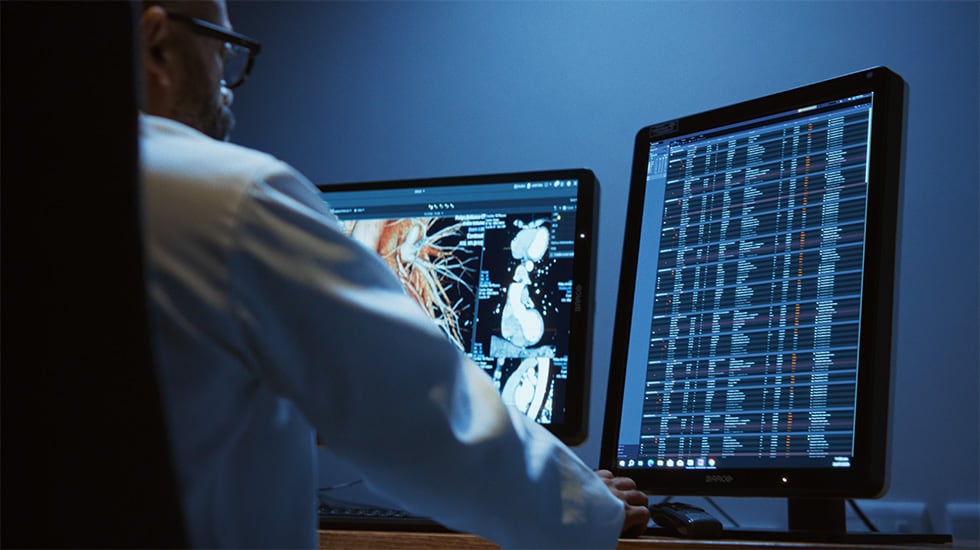
At RSNA 2025, Philips highlights its latest innovations in advanced visualization and AI, designed to simplify radiology workflows, enhance diagnostic confidence, and help clinicians focus on delivering high-quality patient care. Philips’ latest portfolio advancements are designed to help clinicians work more efficiently and effectively.
Simplifying diagnostic workflows
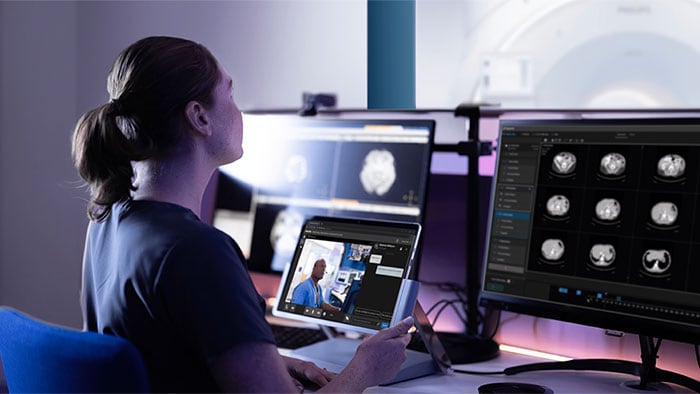
The new Philips Advanced Visualization Workspace (AVW) 16 [1], is a vendor-neutral, multi-modality platform designed to help radiologists move from images to answers with greater speed and confidence. Including a new Cardiovascular Suite, which enables clinicians to conduct cardiac CT, MR, and vascular imaging and planning within a unified environment, supporting efficient workflows and customizable reporting. With the AI-driven workflows and expanded multi-modality clinical portfolio in AVW 16, radiologists are supported in their interpretation of complex studies with speed, precision, and confidence – improving care delivery across cardiac, oncology, neuro, and vascular imaging studies.
By integrating automated workflows, quantitative analysis, and multi-modality view, AVW 16 turns complex imaging data into clear, actionable insights – reducing reading times by up to 44% in key applications like longitudinal brain analysis [2]. Building on Philips’ commitment to AI-enabled precision across imaging, AVW 16 reflects the company’s broader vision of seamlessly connecting data, technology, and clinical expertise – from acquisition to diagnosis.
Philips is also showcasing Advanced Visualization Workspace on Philips HealthSuite [3], powered by Amazon Web Services (AWS). This Software-as-a-Service (SaaS) offering enables care teams to move seamlessly from image to diagnosis, enhancing efficiency and supporting confident decision-making. By extending advanced visualization capabilities to the cloud, Philips enables healthcare organizations to scale access to advanced tools, reduce IT complexity, and provide secure, anytime, anywhere access to studies – promoting greater diagnostic consistency across teams and sites.
The cloud-based Advanced Visualization Workspace has made a noticeable difference to our day-to-day workflow. Accessing MR cardiac studies is faster and far more flexible – we can review cases from anywhere without being tied to a specific workstation.
"The cloud-based Advanced Visualization Workspace has made a noticeable difference to our day-to-day workflow. Accessing MR cardiac studies is faster and far more flexible – we can review cases from anywhere without being tied to a specific workstation. This has helped streamline reporting sessions and reduce unnecessary delays,” said Mark Williams, MRI Service Lead at Calderdale Royal Hospital, NHS, UK.
“Our goal is to empower clinicians with intelligent, connected tools that help them deliver faster, more precise diagnoses and improve outcomes for every patient,” said Martijn Hartjes, Business Leader, Clinical Informatics at Philips. “By designing our innovations around the needs of clinicians, we’re making their work easier, their workflows more efficient, and their impact on patient care even greater.”

Partnering in AI to support confident decisions
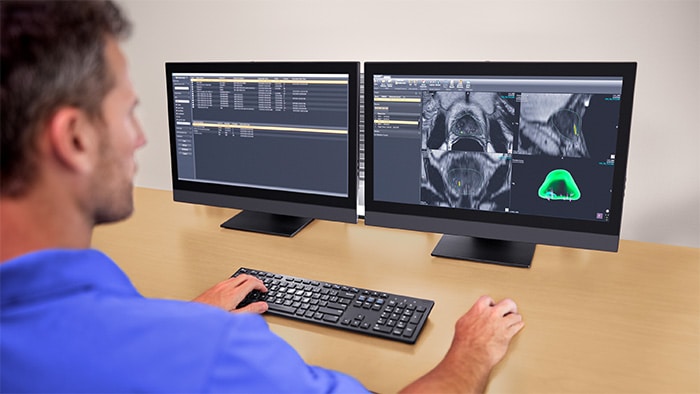
The use of AI in radiology is evolving rapidly, with hundreds of specialized solutions emerging to address specific clinical and operational challenges. The latest additions to Philips’ growing AI ecosystem include 4DMedical and Quibim, to help advance disease-specific diagnostic capabilities and diagnostic workflows. Philips and Quibim are working on a proposed collaboration to streamline prostate cancer diagnostic workflows by integrating QP-Prostate’s AI imaging capabilities with Philips’ DynaCAD Prostate platform [4]. Philips and 4DMedical work together to provide new, actionable information that enhances assessment and treatment planning for patients with pulmonary conditions.
Through strategic AI partnerships, Philips brings together best-in-class capabilities from leading innovators and integrates them to simplify workflows and enable actionable clinical insights – helping clinicians make faster, more consistent decisions with confidence.
Helping clinicians focus on what matters most
Across its informatics portfolio, Philips is reimagining how technology supports care teams. By reducing manual steps, simplifying data access, and enabling AI, Philips continues to advance precision diagnosis with intelligent, connected solutions that reduce complexity, streamline workflows, and give clinicians more time to focus on what matters most – delivering confident diagnoses and high-quality patient care.
For more information about Philips at RSNA visit here.
* Results are specific to the institution where they were obtained and may not reflect the results achievable at other institutions.
Sources [1] This AVW16 release is intended for distribution, pending country-specific regulatory registration and approval. Future availability cannot be ensured. The product is not available for sale in the USA and China. Please contact your sales representative to determine if the product is available in your country.
[2] Follow-up MRI in Multiple Sclerosis patients: automated co-registration and lesion color-coding improves diagnostic accuracy and reduces reading time. European Radiology. 2019 Dec;29(12):7047-7054
[3] This product is pending country-specific regulatory registration and approval. Future availability cannot be ensured. Please contact your sales representative to determine availability in your country.
[4] The product is not available for sale in the USA and any other jurisdictions. Future availability is pending regulatory registrations. Please contact your sales representative to determine availability in your country.
Media contacts

Contact details Contact details

You are about to visit a Philips global content page
Continue