Beyond the scan: transforming healthcare with medical imaging
May 19, 2026 | 4 minute read
Good health helps people live better lives and supports stronger communities and economies. Along with education, it gives people the opportunity to grow, contribute and build a better future for themselves and others. Unfortunately, an estimated two-thirds of the global population lack access to essential diagnostic imaging beyond basic X-ray and ultrasound [1]. This diagnostic divide has profound consequences including delayed diagnoses, missed treatments and preventable deaths. It represents one of the greatest barriers to achieving global health targets by 2030.

Non-communicable diseases (NCDs) like heart disease, stroke, chronic respiratory diseases and cancer, now account for 74% of all deaths worldwide [2]. The United Nations set an ambitious goal to reduce premature mortality from NCDs by one-third by 2030, a target that is unachievable without universal access to essential diagnostic imaging. Today, global estimates show that up to 70% of people with COPD and asthma go undiagnosed globally, and 95% of stroke patients miss critical intervention windows due to imaging capacity shortages [3]. In some countries, more than half of lung cancer cases are only detected through emergency care, which is often far too late for optimal treatment outcomes.
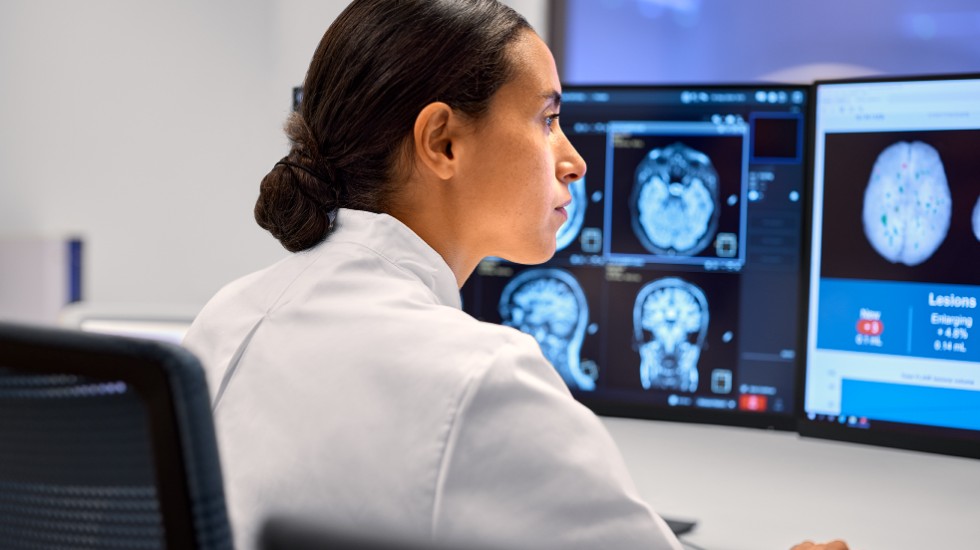
Carla Goulart Peron, Chief Medical Officer at Philips, explained: “Diagnostic imaging is not a luxury, it's foundational to modern healthcare. Through the meaningful application of AI to medical imaging, we are continuously improving image quality, accelerating scans and streamlining workflows. Combined with telehealth technologies, these innovations have the potential to make diagnostic services accessible to patients everywhere, regardless of geography or resources."
Investment makes financial sense
Medical imaging is highly cost-effective and plays a critical role in improving healthcare productivity and delivering savings. Bringing all countries to basic diagnostic capacity standards requires approximately USD 6.84 billion globally over a decade [4]. Additionally, every dollar invested could yield a value of up to USD 31.61 in benefits [5].
Diagnostic errors consume an estimated 17.5% of all healthcare spending globally – equivalent to up to USD 676 billion annually [6]. But studies show that as much as 80% of harm caused by delayed or misdiagnosis may be preventable [7]. Early diagnosis through adequate diagnostic imaging capacity helps reduce these downstream costs from advanced disease, unnecessary procedures and prolonged treatment.
Technology is advancing access and productivity
The rapid advance of AI is driving the evolution of medical imaging. AI can enhance diagnostic confidence and workflow efficiencies, identifying abnormalities with greater speed compared to traditional methods. These advancements help reduce diagnosis times, streamline workflows and improve patient outcomes.
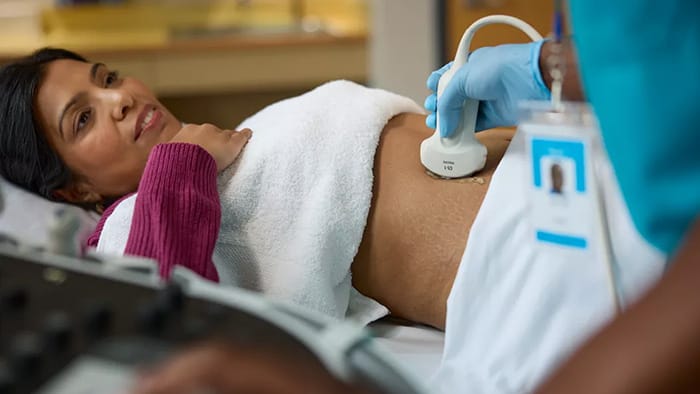
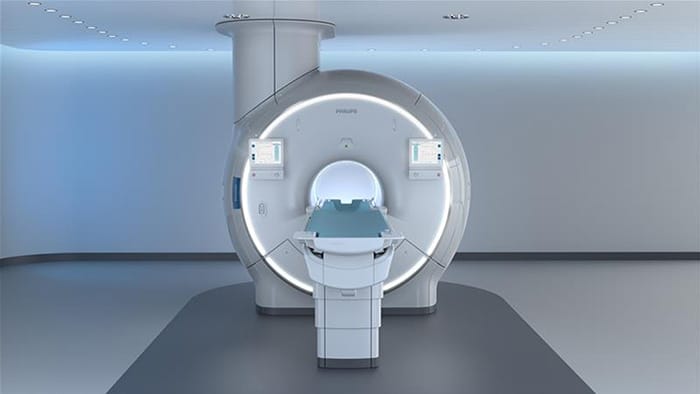
Other improvements, such as better access to medical imaging, is being enabled by new technologies that are bringing these services closer to the patient. Portable ultrasound and helium-free MRI systems are delivering diagnostics to remote and underserved regions. Teleradiology and radiology command centers help connect patients and local practitioners with remote radiologists, who can serve vast geographic areas through digital connectivity solutions. These solutions are growing rapidly in many markets, particularly in Asia where teleradiology adoption has an annual market growth rate of 25% [8].

Building the case for action
In support of strengthening medical imaging capacity, the 2025 World Health Assembly issued a resolution with a mandate for action. This requires coordinated global action across five key areas:
1. Establish benchmarks and secure capital (2026–2027)
The World Health Organization (WHO) and medical societies should publish minimum diagnostic capacity benchmarks during 2026. This includes governments establishing dedicated capital budgets with recommended 7–10 year equipment replacement cycles, in line with the COCIR guidelines. Development banks should scale up innovative financing through blended finance, public-private partnerships and social impact bonds to address the USD 6.84 billion global gap.
2. Deploy hub-and-spoke networks (2026–2028)
Countries should pilot integrated diagnostic networks connecting remote sites to centralized command centers using teleradiology and telehealth platforms. Priority should be given to underserved regions and geographically dispersed populations, with networks integrating CT, MR, ultrasound and X-ray solutions based on local population needs. These networks should be designed to integrate imaging data with complementary diagnostic information from pathology, laboratory testing and other clinical specialties, creating a unified patient record that enables clinicians to access comprehensive diagnostic insights for faster, more informed decision-making. This approach has proven particularly effective for stroke care, oncology and emergency diagnostics where rapid diagnosis determines outcomes.
3. Modernize payment systems (2026–2027)
Governments are encouraged to reform reimbursement systems to make diagnostic value visible rather than treating medical imaging as a cost center. Creating billing codes for AI-enhanced services and digital diagnostic delivery, including remote interpretation, will enable appropriate financing. Payment structures should be redesigned to support integrated diagnostics platforms combining imaging, pathology and laboratory testing, and be designed for each country's requirements.
4. Build workforce capacity (2026–2030)
Scaling education infrastructure through regional centers of excellence with public-private partnerships is essential to address critical workforce shortages. By embedding AI and digital tools in medical curricula at the beginning of training programs, the next generation of clinicians can be prepared and skilled for the future of imaging. These efforts can support the creation of sustainable career pathways, and continuous training will be key to ensure that workforce capacity grows alongside technology.
5. Strengthen digital infrastructure (2026–2030)
Countries are advised to develop integrated strategies for data interoperability, cloud storage, high-speed connectivity and AI deployment that enable both workforce productivity and network scalability. Implementing quality monitoring systems will ensure standards are maintained by tracking diagnostic performance and patient outcomes.
Philips supports the investments presented in the 2025 World Health Assembly resolution. Recent advances in AI, portable diagnostics and teleradiology networks demonstrate that universal access to quality imaging is both technically feasible and economically compelling.
In addition, Philips is committed to partnering with governments, development banks and health system leaders to translate the WHO resolution into implementation. The company provides integrated solutions, financing expertise and workforce development support tailored to each country's needs.
The 2026-2027 budget cycle represents a critical window to act. Countries that establish imaging capacity investments during this period will be better positioned to meet the 2030 NCD targets and deliver better care for more people.
Together, we’re working to improve medical imaging capacity as a cornerstone of modern care and building healthier, more productive populations worldwide.
To read the policy paper, Beyond the scan: Transforming healthcare with medical imaging, click here.
Sources 1. Fleming KA, Horton S, Wilson Ml et al, (2021). The Lancet Commission on Diagnostics. Transforming Access to Diagnostics, The Lancet, Vol 398(10315) 2. World Health Organisation. Noncommunicable diseases fact sheet. https://www.who.int/news-room/fact-sheets/detail/noncommunicable-diseases 3. e136-72. Data from IMAGINE database: IAEA Medical imAGIng and Nuclear mEdicine global resources database (IMAGINE) | IAEA 4. Hricak et. Al, Medical imaging and nuclear medicine: a Lancet oncology Commission, Lancet Oncology 2023; 22: e136-72. 5. Fleming KA, Horton S, Wilson Ml et al, (2021). The Lancet Commission on Diagnostics. Transforming Access to Diagnostics, The Lancet, Vol 398(10315). 6. Slawormirski L, Kelly D, de Bienassis, K, Kallas K, and Klazinga N, The economics of diagnostic safety, OECD Health Working Papers No. 176, 2025 7. Slawormirski L, Kelly D, de Bienassis, K, Kallas K, and Klazinga N, The economics of diagnostic safety, OECD Health Working Papers No. 176, 2025 8. Teleradiology Market Size & Share | Industry Report, 2030