Synthetic medical imaging: accelerating AI in healthcare while protecting privacy
Oct 24, 2025 | 2 minute read

About the author About the author
With over 20 years of experience in healthcare technology, Martijn is a global business leader passionate about advancing clinical informatics and precision diagnosis. As Business Unit Leader for Clinical Informatics, he leads five solution areas spanning Digital Pathology, Advanced Visualization & AI in Radiology, Urology, Acute Care, and EMR. Known for driving innovation, cross-functional collaboration, and go-to-market excellence, Martijn is inspired by Philips’ mission to deliver better care to more people through meaningful innovation.

You are about to visit a Philips global content page
Continue Artificial intelligence (AI) is transforming healthcare by enabling earlier disease detection, more accurate diagnoses, and better-informed treatment decisions. But to deliver on this potential, AI models must be trained on data that clinicians can trust, reflective of the full diversity of patient populations. That vision is compelling – but achieving it is easier said than done. Real-world data is often fragmented, difficult to share, and highly sensitive due to privacy concerns. This makes it hard to gather comprehensive datasets for effective AI training. Without new approaches, the gap between AI’s promise and its real-world impact will remain.
Introducing synthetic medical images
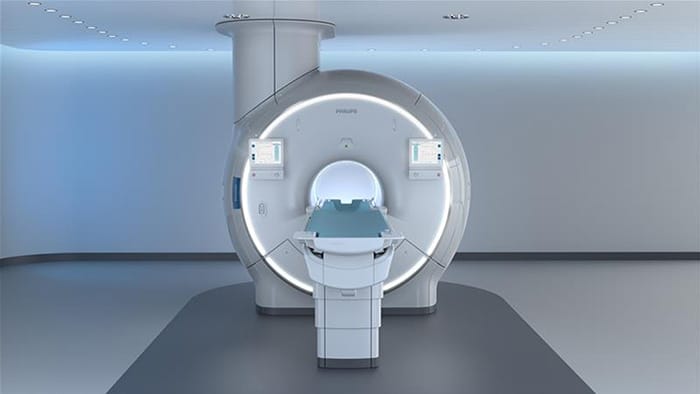
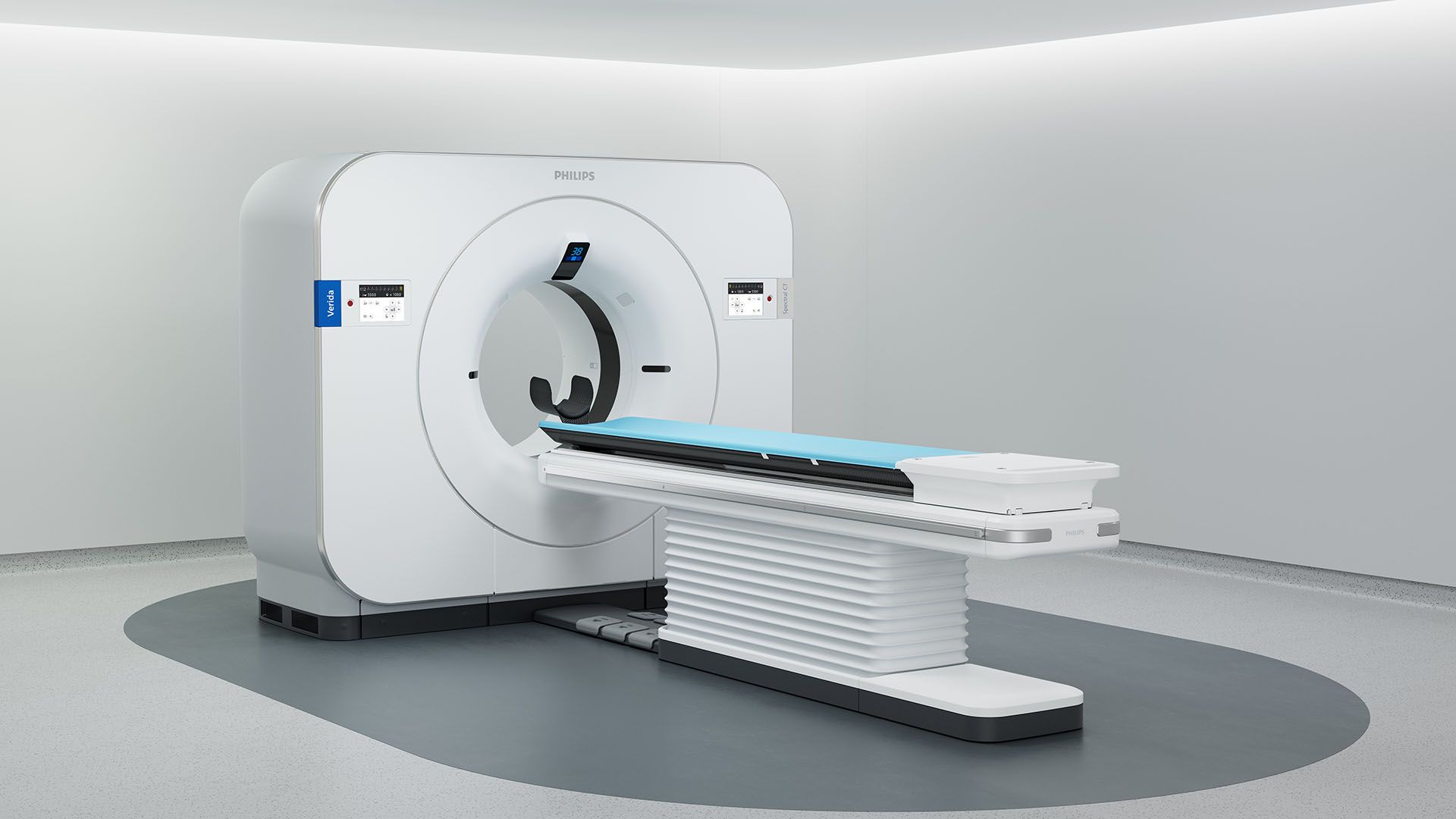
Overcoming these limitations requires thinking beyond traditional data sources. At Philips, we are exploring this challenge with a promising approach: realistic, algorithmically generated Computed Tomography (CT) and Magnetic Resonance Imaging (MRI) scans. Large-scale synthetic medical image datasets enable AI models to learn from a diverse and extensive range of population samples, improving their accuracy and robustness, while their algorithmic generation helps protect sensitive patient data and dispel privacy concerns.
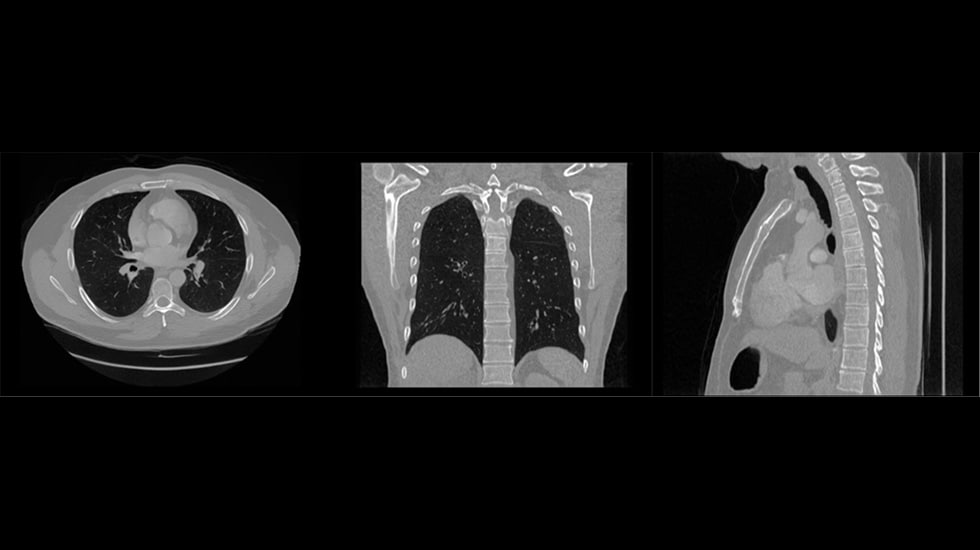
Disclaimer: These images were produced as part of exploratory research into synthetic medical imaging and do not represent finalized outputs or validated clinical use cases.
Advancing AI systems with synthetic data
As a key partner of Project SEARCH – a collaborative initiative focused on harnessing synthetic data to strengthen diagnostic AI in medical imaging analysis – Philips brings decades of leadership in imaging software, AI, and deep expertise across clinical settings. Our goal is to ensure that synthetic datasets are not only technically accurate but also clinically meaningful and can be trusted by healthcare professionals. These applications show how synthetic data can close gaps in existing training datasets, shorten development time, and improve algorithm performance, all without compromising patient privacy.
We are applying synthetic data in areas where it can make a real difference:
Building medical professionals’ trust in synthetic imaging data
Project SEARCH goes beyond synthetic medical image generation that mimics electronic health records. Together with our clinical partners, we are defining a framework to validate synthetic images for quality, privacy, and clinical relevance.
Our work with synthetic CT data targeting tumor detection and classification shows encouraging preliminary results. The insights we gain from this project will serve as a launchpad for expanding into cardiovascular applications and, ultimately, a multi-modality engine that can strengthen AI across a wide range of diagnostic use cases.
Why it matters
Synthetic medical data isn’t just a technical advancement. It’s a vital enabler of responsible, people-centered AI, helping to accelerate innovation while preserving trust. By focusing on impact, synthetic data has the potential to empower clinicians, strengthen healthcare providers, and improve patient outcomes.
Through our role in SEARCH, we are shaping the future of healthcare AI in a way that is safe, scalable, and centered on what matters most: improving health and well-being through meaningful innovation.
Learn more
Explore how innovation in imaging and synthetic data is shaping the future of healthcare: