135 years of Philips: an innovation diary
May 13, 2026 | 4 minute read

About the author About the author
Freek Janssen is director of the Philips Museum in Eindhoven. This museum is located in the first factory of Philips in Eindhoven and shows how Philips has evolved from a lightbulb manufacturer to a health tech leader. Freek has a background in storytelling and communications.

You are about to visit a Philips global content page
Continue On May 15, Philips celebrates being in business for 135 years [1]. Over the course of all those years, Philips not only brought an unimaginable number of innovations to the market, but also managed to reinvent itself time and again. Let’s follow the path from 1891 to 2026 and learn about some of the innovations along the way. Our story begins, 135 years ago, on the Emmasingel in Eindhoven…
1891: Gerard Philips makes his first light bulbs
Gerard Philips begins producing incandescent light bulbs in Eindhoven, using a complex process of various chemical reactions and glass bulbs, produced in red-hot ovens. Electric lighting meant days lasted longer, transforming how people live and work. Thanks to the quality and reliability of its lamps, Philips grows rapidly in its early years – laying the foundation for more than a century of innovation.
1895: Wilhelm Röntgen takes the first X-ray
In Germany, physicist Wilhelm Röntgen makes a discovery that will change the future of healthcare forever. When he asks his wife to place her hand under a machine, she sees the outline of her own skeleton - complete with her wedding ring. It’s the world’s first X-ray image.
Frederik Philips, founder of the Philips company and father of Anton and Gerard, hears about this technique and immediately writes to his sons. Philips’ journey in healthcare innovation begins.
1924: Philips introduces the Metalix
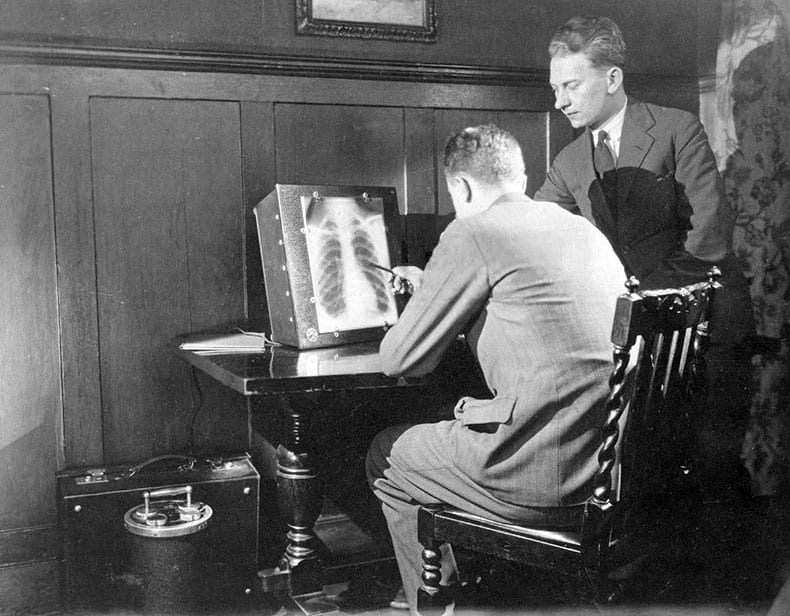
In 1924, Philips unveils the Metalix X-ray tube in London. Developed by researchers Gilles Holst and Albert Bouwers at the Philips NatLab research laboratory, the Metalix is a major advance in X-ray safety and performance as it dramatically reduces harmful radiation exposure.
The breakthrough originated from Holst observing employees of the light bulb factory dip metal blowpipes into piping hot molten glass to make the glass bulbs. After a series of tests at the Natlab, Holst succeeded in bonding chromium iron and glass. Albert Bouwers subsequently developed this into the Metalix: a glass cylinder with a chrome-iron, airtight ring, which means fewer fewer harmful X-rays. With the Metalix, Philips establishes itself as a pioneer in medical imaging technology.
1930: Expanding access to tuberculosis screening
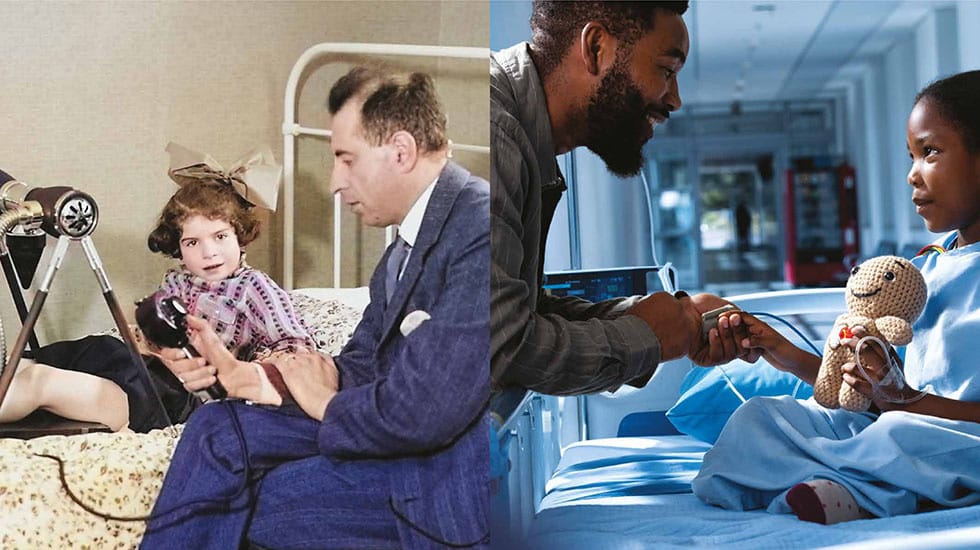
Around 1930, Philips sees an opportunity not only to innovate healthcare technology but also to increase access to care. During a major tuberculosis outbreak in the Netherlands, Philips uses its own X-ray equipment to conduct preventive screenings – first for employees, then their families, and eventually the entire population of Eindhoven. The result: The spread of tuberculosis in Eindhoven is 70% lower than in the rest of the Netherlands. The initiative later expands across the Netherlands, showing how innovation can help bring healthcare to more people.
1970: Golden years of innovation culminated in the chip revolution
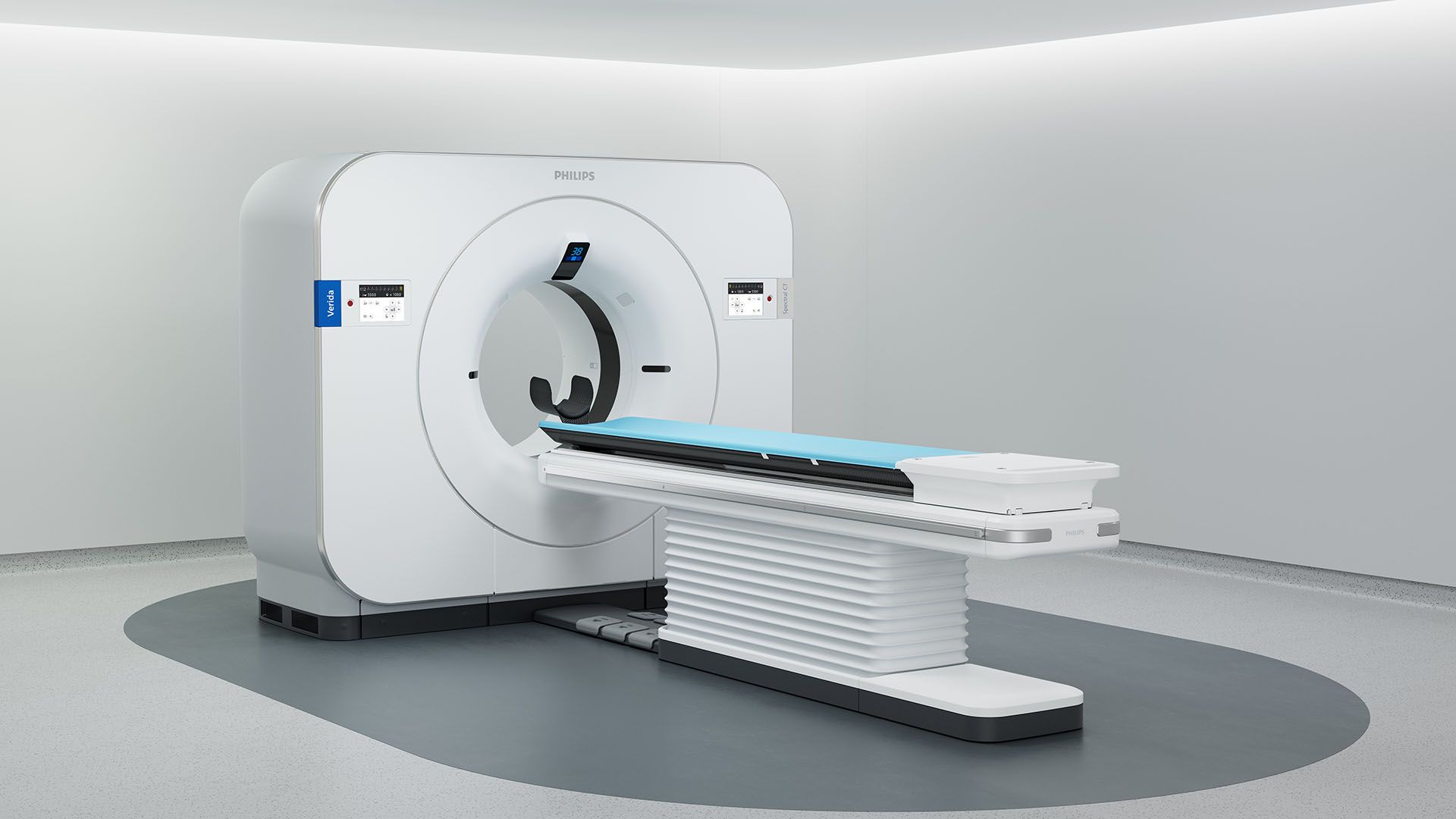
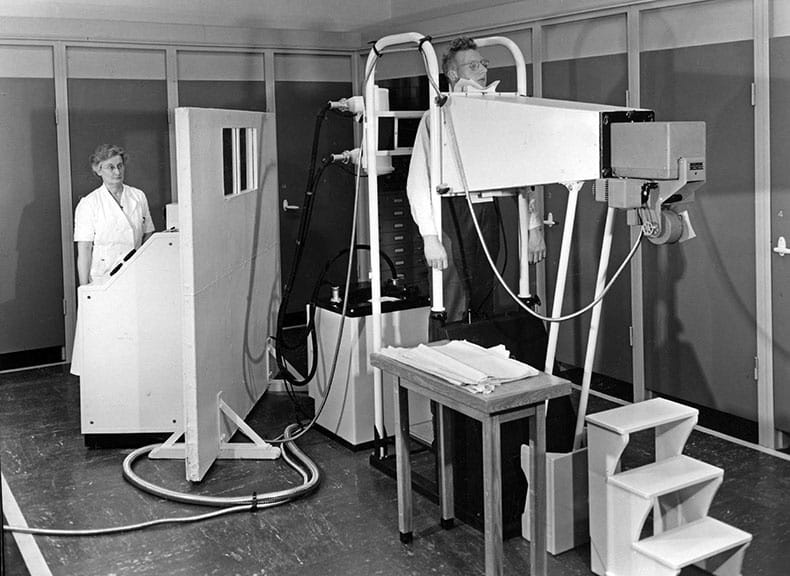
In the years after 1940, Philips continues to innovate at a rapid pace. In a short time, Philips introduces the Polytome (precursor to the CT scanner, 1951), the BV20 (an X-ray system for surgery, 1954), mammography systems (1967), and neutron therapy systems (1974). At the same time, researchers at Philips NatLab, develop the LOCOS technique, an important step in the evolution of microchips. An important step in the evolution of microchip technology. These innovations help shape modern healthcare and the digital world.
1980: The digital revolution increases access to healthcare
Philips grows rapidly in healthcare and in consumer technology. With the invention of the CD (and CD player), the company set in motion a revolution in which the reading and storage of digital information – data – plays an increasingly important role in all branches of technology. Healthcare benefits as well. Large and heavy X-ray scans and files containing patient information were digitized and exchanged much more efficiently between various healthcare institutions. Digitalization helps improve collaboration, workflow efficiency and access to care.
2003: People-focused innovation: Ambient Experience
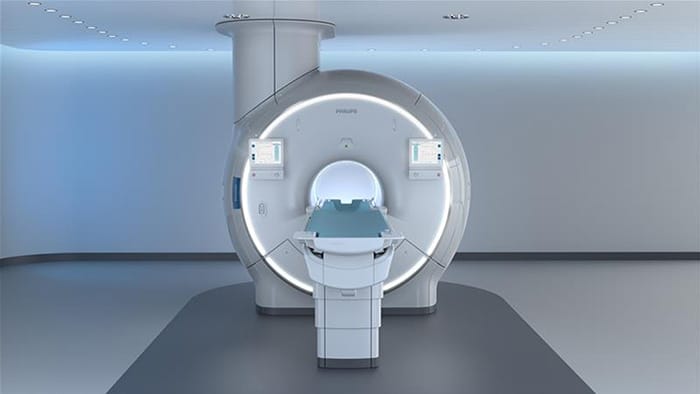
Technology alone does not define the patient experience. With Ambient Experience [2] Philips combines design, lighting and technology to create a soothing and comfortable environment. Developed through close collaboration between clinicians, researchers and designers, Ambient Experience helps reduce anxiety during procedures such as MRI scans. By making patients feel more relaxed, the solution contributes to a better overall care experience and supports more efficient clinical workflows.
2017: Navigating during medical procedures with the Azurion
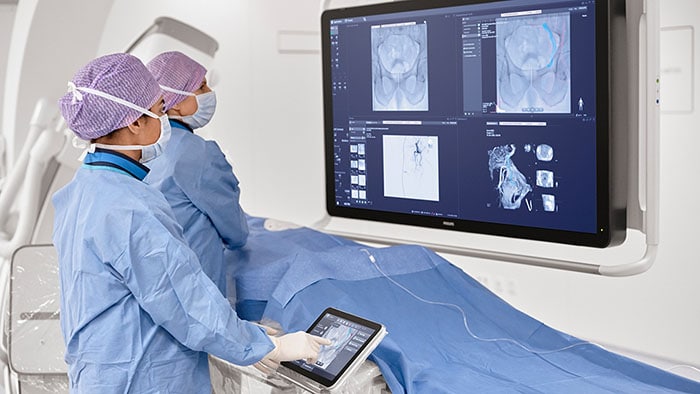
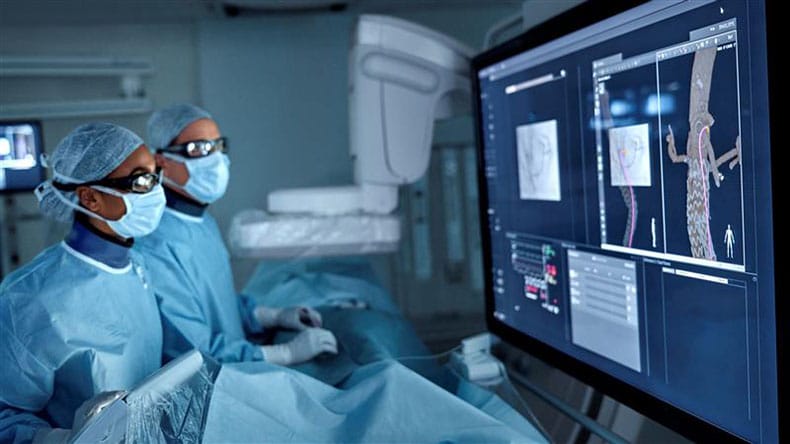
Philips develops the Azurion[3] platform for image-therapy, enabling clinicians to perform minimally invasive procedures with greater precision and efficiency. Azurion combines high-quality imaging with integrated access to patient data, scans and 3D visualizations during procedures. By supporting both routine and complex interventions, the platform helps clinicians work more efficiently while reducing radiation exposure for patients and care teams.
2025: LumiGuide advances light-based innovation
During the RSNA Conference in Chicago, Philips announces the commercial launch of LumiGuide – a breakthrough in light-based image-guided therapy. Built on the Azurion platform, LumiGuide uses light to visualize the shape and position of LumiGuide wires and endovascular catheters in real time and in 3D inside the body, without the use of X-ray radiation. More than a century after Philips began with electric light, light continues to inspire new advances in healthcare innovation.
2026 - and beyond: accelerating healthcare innovation with AI
Philips is continuing to advance innovation through artificial intelligence and data-driven healthcare technologies.
AI already plays a critical role in solutions such as LumiGuide, where it helps align imaging data with patient anatomy in real time to support accurate navigation during procedures.
Philips is applying AI to help clinicians work more efficiently, improve patient outcomes and expand access to quality care.
The ambition remains clear: improving the lives of 2.5 billion people per year by 2030. More than 135 years after its founding, Philips continues to build on its legacy of innovation with the goal of delivering better care for more people.
Sources [1] https://www.philips.com/a-w/about/our-history.html
[2] https://www.philips.com/a-w/about/news/archive/standard/news/articles/2026/how-empathy-shaped-the-azurion-experience.html
[3] https://www.philips.com/a-w/about/news/archive/standard/news/articles/2025/how-to-design-for-a-reassuring-mr-experience.html