How Philips Personal Health is driving a circular economy through sustainable design
Apr 06, 2026 | 2 minute read
Sustainability is reshaping the consumer health market. Products positioned as sustainable grew 8% in value between 2020 and 2023, outperforming the wider category according to Euromonitor International.¹ At the same time, global demand for renewable and sustainable energy alternatives and materials continues to rise, driven by the expansion of bio-based products.² In personal health, that interest is clear. Three in four consumers express substantial interest in bio-based personal care products.3

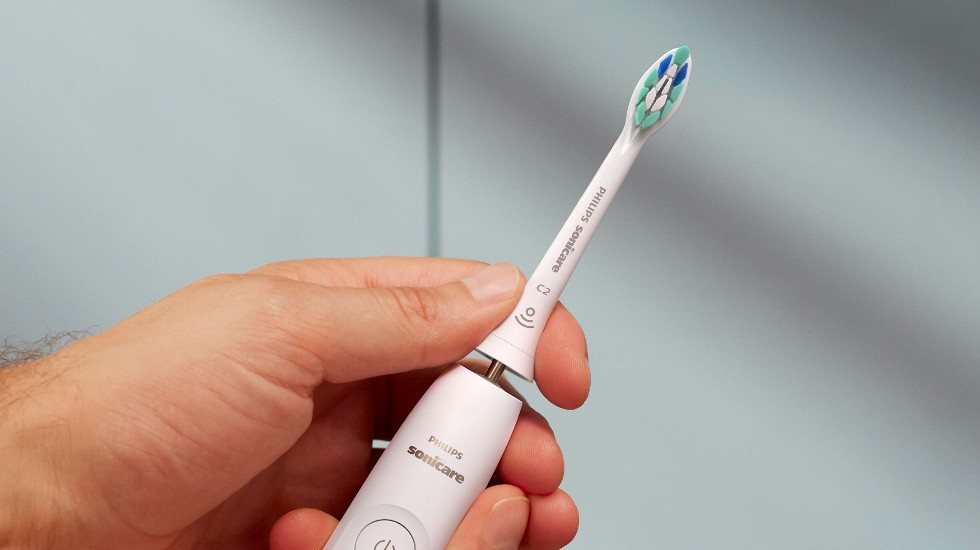
For Philips, this shift aligns with established leadership in sustainability. In 2020, the company achieved carbon neutrality in its operations and began sourcing 100% of its electricity from renewable sources.4 Its mission to improve people’s health and well-being through meaningful innovation extends across the value chain, from supply chain standards to the materials used in products and packaging. Philips designs new products and services in line with its EcoDesign principles. These principles guide efforts to improve energy efficiency, reduce the use of virgin materials, increase recycled content and phase out hazardous substances. Teams also design for circularity, making products easier to repair and recycle, and simplifying packaging so it can be reused or more easily processed at end of life. Driven by consumers’ increasing preference for more eco-friendly products and the company’s commitment to operating more sustainably, Philips Personal Health is investing in using bio-based materials, while also staying committed to helping people live well for longer. The full portfolio5 of Philips Sonicare toothbrush heads are now made from 70% bio-based plastic6, and the company has expanded its usage of paper based packaging. These are two examples of sustainable improvements to product and packaging.
Redesigning a trusted baby product for a better future
Today, more parents are being driven towards buying sustainably sourced products7. With this in mind, and with the use of eco-friendly materials clearly a key area for innovation, the brand has made great strides in meeting this bio-based opportunity head-on. Take the upcoming launch of Philips Avent’s Ultra Pacifiers. Trusted by parents around the world, the new pacifiers are now made of 80% plant-based material8. The plant-based material comes entirely from vegetable oil. It contains no animal fats, is not in competition with the food chain and, because the source is renewable, it produces lower CO2 emissions9. While research shows10 bio-based materials and processes can benefit the environment, society and the economy, Philps Avent had to be sure the pacifiers were more sustainable, safe and comfortable for babies, says Mirko Cartei, R&D Leader, Mother & Child Care: “As part of our commitment to making all new and redesigned Philips Avent products more sustainable, the biggest challenge was ensuring we selected the right material and its traceable supply chain. This process involved lengthy discussions with different suppliers, followed by thorough testing to ensure the materials meet health and safety standards. We also had to review and study suppliers’ sustainability reports (Life Cycle Analysis) and coordinate the certification of the material supply chain traceability. This process involved us obtaining a lot of data that we then had to examine and process,” adds Mirko.
Giving products a second life
Consumers’ growing demand for more sustainable and affordable products is also driving their preference for refurbished goods, with surveys showing over 70% of millennials and Gen Z are open to purchasing refurbished electronics especially11. Through its Refurb Editions program, Philips refurbishes a selection of Personal Health products, including Philips Lumea IPL hair removal devices, Sonicare toothbrushes and some shavers. Most of the products were previously sold online and returned within 30 days. Philips replaces the products’ hygiene-related accessories, such as the shaver’s blades, and thoroughly cleans them. Each product is then tested to ensure it meets rigorous quality standards before being repacked in original or recycled packaging, and comes with a two-year warranty. In 2024, more than 30,000 refurbished Philips branded products found a home, with an estimated nine kilotons of products and packaging recycled in the EU alone12.
Piloting 3D printing parts for DIY consumers
Knowing that 77% of Europeans would rather buy a repaired product than a new one, Philips Personal Health teamed up with Prusa Research, a leader in 3D printing, to launch a new pilot program in Czechia called Fixables. This pilot plans to give people free access to 3D-printable files for select Philips accessory parts. Using the open access files, people can choose to repair the part rather than replace the whole product if lost, worn or out of warranty. The pilot aims to strength the brand’s circular model, enabling people to maintain products without compromising quality.
From plastic to paper-based and recyclable packaging
Consumers today expect brands to innovate their product offerings and packaging to reduce environmental impact. This includes using sustainable materials and developing products that minimize waste13. Philips Personal Health is continuing to work on using more sustainable packaging across its products. The commitment shows: all Sonicare brush heads come in recyclable packaging. Similarly, the packaging for shavers like Philips OneBlade and the Philips i9000 is paper-based. Plus, the newly redesigned Ultra Pacifiers are sold in sustainable or recyclable packaging.
An ongoing commitment and priority to the planet and people
Every step towards a healthier planet is an important one, and consumers today want brands to show their commitment to and progress towards sustainability14. And this shift towards sustainable materials and designs is part of an evolution that will continue to redefine how products are made, used, and reused in the years ahead. Philips is on that journey with consumers. From achieving its goal in 2020 of being 100% carbon neutral in Philips own operations, to stepping up our environmental ambitions for 2030, including reduced use of virgin non-renewable materials and making more materials available for re-use. By rethinking product design and packaging, and extending the life of products through refurbishment, Philips is making sustainability tangible for consumers.
References [1] Euromonitor International. (2025). Unlocking sustainability opportunities in consumer health. https://www.euromonitor.com/article/unlocking-sustainability-opportunities-in-consumer-health [2] Research and Markets. (2023, September 20). Global shift towards renewable materials driving the rise of bio-based products [Press release]. Business Wire. https://www.businesswire.com/news/home/20230920412703/en/Global-Shift-Towards-Renewable-Materials-Driving-the-Rise-of-Bio-Based-Products---ResearchAndMarkets.com [3] Shell plc. (n.d.). Sustainable personal care ingredients. https://www.shell.com/business-customers/chemicals/resources/sustainable-personal-care-ingredients.html [4] In Philips operations. Source: Koninklijke Philips N.V. (n.d.). Climate action: Driving climate action in our own operations and beyond. https://www.philips.com/a-w/about/environmental-social-governance/environmental/climate-action.html [5] With the exception of Philips One Brush Heads [6] Allocated to plastic of brush head on mass balance basis [7] Future Market Insights, Inc. (2025, March 11). Baby personal care products market: Size & growth 2025 to 2035 (250 pp.). https://www.futuremarketinsights.com/reports/baby-personal-care-products-market?utm_source=chatgpt.com [8] Hard plastic parts excluding silicone teat (mass balance approach) [9] All Philips Avent’s Ultra Pacifiers have International Sustainability and Carbon Certification [10] European Commission. (n.d.). Bio-based products and processes. https://research-and-innovation.ec.europa.eu/research-area/environment/bioeconomy/bio-based-products-and-processes_en [11] ESW. (n.d.). The rise of electronics recommerce. https://esw.com/the-rise-of-electronics-recommerce/ [12] Royal Philips. Annual Report 2024. February 21, 2025. Available at: results.philips.com/publications/ar24. [13] CosmeticsDesign. (2025, April 9). Pact, Ulta and Credo Beauty share collective progress on beauty packaging. https://www.cosmeticsdesign.com/Article/2025/04/09/pact-ulta-and-credo-beauty-share-collective-progress-on-beauty-packaging/ [14] Shell plc. (n.d.). Sustainable personal care ingredients.